Your Vascular Healthcare Partner
Need help with new product development?
Koven offers Product Design Consulting Services

The Role of Early Detection in Preventing Major Amputation

September 1, 2026

Preventing major amputation starts when reduced circulation, skin changes, pain, or wounds are recognized before tissue damage becomes irreversible. Lower extremity peripheral artery disease, or PAD, affects about 10 million to 12 million adults age 40 and older in the United States. This raises the risk of amputation, heart attack, stroke, and death. Among adults age 65 and older, nearly half of those who underwent limb amputation died within one year after surgery.

This issue becomes even more urgent in patients with diabetes and foot wounds. Failure to diagnose and treat underlying PAD is a major cause of amputations in that population. PAD may be present in as many as 50% to 70% of patients with diabetic foot ulcers. Early recognition does not guarantee limb preservation in every case. However, it gives clinicians, caregivers, and families more options before the condition reaches a crisis point.

Recognizing Risk Before Tissue Loss that Leads to Major Amputation

One reason limb-threatening disease is missed is that symptoms are not always apparent. Only about 10% of people with lower extremity PAD have classic intermittent claudication, while about 40% have no leg symptoms at all. This means a person may still face serious vascular compromise even if there are no obvious symptoms.

Risk recognition should start with the full clinical picture. Smoking, diabetes, high blood pressure, high cholesterol, and older age all raise the likelihood of PAD. A careful history and physical exam can reveal patterns that would otherwise be dismissed as routine aging, neuropathy, or slow healing.

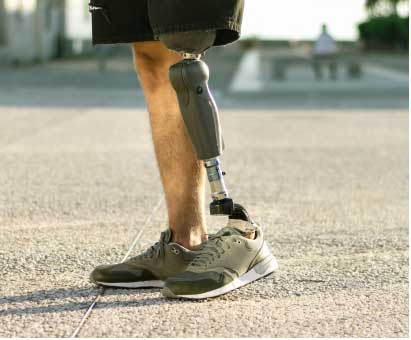
Amputation

Warning Signs that Deserve Fast Attention

Several findings should prompt urgent vascular evaluation, especially when they appear together or worsen over time.

  • Rest pain, especially with minimal activity or while at rest, can signal severe arterial blockage and requires prompt attention.
  • Nonhealing wounds, foot ulcers, gangrene, or tissue breakdown that fails to improve after four weeks of proper wound care should raise concern for significant ischemia.
  • Cool skin, color changes, weak pulses, and reduced walking tolerance should trigger further assessment.
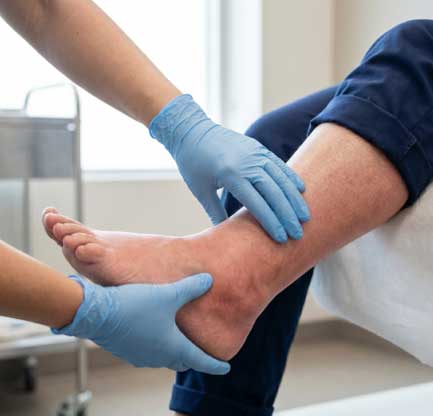
Lower leg exam

Many people report atypical discomfort, fatigue, or subtle functional decline instead of classic claudication. This is why structured evaluation matters. It helps clinicians move from suspicion to action before infection, necrosis, or severe pain sharply increases the risk of major amputation.

A simple example makes the point. A small toe wound in a person with diabetes may seem minor at first. If circulation is impaired, that same wound can stall, deepen, become infected, and threaten the limb. Early recognition changes the conversation from rescue to prevention.

How Noninvasive Vascular Assessment Supports Earlier Actions

Early detection requires more than instinct. In most patients, PAD is identified through a thorough history, physical examination, and resting ankle-brachial index, or ABI. Current primary care guidance also notes that people with symptoms but a normal resting ABI may need additional vascular exams to get a clearer picture of the presence and/or severity of vascular disease.

These assessments matter because visual inspection alone can miss the severity of perfusion loss. A foot may look only mildly abnormal while blood flow is already too limited to support healing. Noninvasive vascular testing helps quantify perfusion concerns and clarifies whether the limb needs close monitoring, rapid referral, or a broader limb-salvage plan.

Protecting Limbs with Koven Technology

When healthcare teams want to strengthen earlier vascular assessment, the right tools can support clearer decisions at the point of care. Koven Technology has served the vascular community since 1981 and offers noninvasive vascular Dopplers for the diagnosis and monitoring of peripheral arterial disease. This focus aligns closely with the larger clinical goal of finding blood flow problems before wounds worsen and limb loss becomes more likely.

For facilities that need more comprehensive lower extremity testing, the Smartdop XT is Koven’s most advanced vascular testing system. Send us a message today.
Contact Us
Schedule a call
Koven logo

625 Maryville Centre Dr., Suite 300, St. Louis, MO 63141

© 2023 Koven Technology, Inc.
WBU-001 rev0